Why Gardening Education Matters
Connecting with Nature
Gardening education reintroduces people, especially children, to the rhythms of the natural world. It teaches where food comes from, how ecosystems function, and what it takes to grow something from a tiny seed. This direct connection fosters respect for the environment and helps individuals understand their role in preserving it.
Building Life Skills
Gardening is a hands-on way to develop practical skills. Planning a garden involves organization and patience. Caring for plants builds responsibility and attention to detail. Harvesting the results teaches reward through effort. These are lessons that translate far beyond the garden bed and into everyday life.
Encouraging Healthy Habits
Students and adults involved in gardening are more likely to consume fruits and vegetables. When people grow their own food, they develop an appreciation for fresh produce and are more inclined to make healthier food choices. Gardening also promotes physical activity and mental wellness, providing a therapeutic escape from daily stress.
Supporting Academic Learning
Gardening ties into many academic subjects. Math is used to measure plant spacing and calculate growth rates. Science comes alive in soil tests, plant biology, and weather tracking. Literacy improves through journaling and research. Even social studies are involved when examining global agricultural systems or traditional farming practices.
Fostering Community and Collaboration
Gardening programs often bring people together. School gardens, community plots, and neighborhood green spaces provide opportunities for collaboration, shared responsibility, and intergenerational learning. In urban areas, community gardening helps combat food deserts and builds social ties across diverse populations.


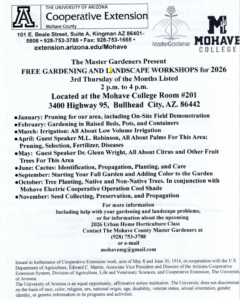
MASTER GARDENER TRAINING
101 East Beale St, Kingman, AZ 86401 January 15 - April 16, 2026 - 9:30am - 1:00pm

Have A Gardening or Landscaping Question?
Ask A Master Gardener – Call 928-753-3788
Or Email: mohavemg@gmail.com